


Team cohesion is essential for employee satisfaction and, consequentely, business results. But how can companies achieve this?

Back to Blog
Executive Summary
Team cohesion is one of the strongest predictors of productivity, collaboration, and long‑term employee satisfaction. When teams feel connected and aligned, they communicate better, solve problems faster, and maintain higher levels of engagement.
This article explores what team cohesion means, the four pillars that support it, and the long‑term benefits for organizations that intentionally invest in building cohesive teams. It also highlights how gamification can strengthen cohesion by turning collaboration, recognition, and shared progress into motivating experiences. Ready to dive in?
Team cohesion describes how strongly team members feel connected to one another and committed to their shared goals. It’s the sense that this team works as one, not as a group of individuals completing separate tasks. Cohesion shows up in the way people communicate, support each other, and coordinate their work.
A cohesive team doesn’t avoid conflict or think the same way. Instead, it creates an environment where people feel safe to share ideas, challenge assumptions, and collaborate openly. When cohesion is strong, team members trust each other, understand their roles, and feel motivated to contribute to the team’s success.
This sense of unity becomes especially important in fast‑paced environments, where teams need to adapt quickly, solve problems together, and maintain clarity even when priorities shift.
Cohesion plays an important role in how teams perform, grow, and stay engaged. Its impact is visible across several dimensions of team performance.
Teams with high cohesion tend to communicate more effectively, which reduces misunderstandings and speeds up decision‑making. They also collaborate more naturally, sharing information and offering help without being asked. This creates a smoother workflow and reduces friction in day‑to‑day operations.
Cohesion also strengthens intrinsic motivation. When people feel connected to their team, they care more about the outcome of their work and are more willing to go the extra mile. This leads to higher productivity, better problem‑solving, and stronger overall team performance.
Finally, cohesive teams tend to have higher levels of employee engagement and lower turnover. People are more likely to stay in environments where they feel supported, valued, and part of something meaningful.

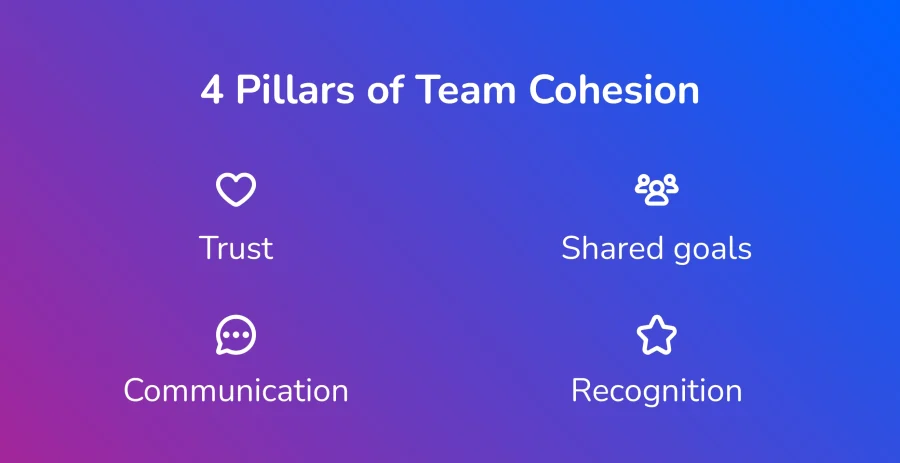
Trust is the foundation of any cohesive team. Without it, collaboration becomes cautious and transactional. With it, teams communicate openly, take healthy risks, and rely on each other’s strengths.
Trust grows when team members consistently show reliability, honesty, and respect. It also strengthens when leaders model transparency and fairness, creating a culture where people feel safe to speak up and share ideas.
Communication is the glue that holds teams together. Cohesive teams communicate frequently and clearly, ensuring that everyone understands priorities, expectations, and progress.
Good communication it’s all about listening, asking questions, and making space for different perspectives. When communication flows naturally, teams stay aligned even during high‑pressure moments.
Shared goals give teams a sense of direction and purpose. When everyone understands what they are working toward and why it matters, coordination becomes easier and more effective.
Without shared goals, individuals tend to focus on their own tasks or priorities, which leads to siloed work and misalignment. When goals are clear and visible, teams move together with clarity and focus.
Recognition reinforces positive behaviors and strengthens relationships. When team members feel appreciated, they become more motivated, more engaged, and more committed to the team’s success.
Recognition doesn’t need to be formal or elaborate. Small, frequent moments of appreciation (especially peer‑to‑peer) can significantly improve team morale and cohesion. It also helps people feel seen, which is essential for long‑term engagement.
Organizations that invest in team cohesion see long‑lasting advantages that go far beyond day‑to‑day performance.
Cohesive teams adapt more quickly to change because they trust each other and communicate effectively. They maintain higher levels of engagement, which reduces turnover and improves team stability. They also create a healthier work environment where people feel supported, valued, and motivated to contribute.
Over time, cohesion becomes a competitive advantage. It strengthens culture, accelerates learning, and helps companies build high‑performing teams that consistently deliver strong results. Cohesive teams are also more resilient, able to navigate challenges without losing momentum or morale.
Traditional team‑building activities can help, but they often feel disconnected from real work. Gamification offers a more natural way to strengthen cohesion by integrating collaboration, recognition, and shared progress into everyday workflows.
Gamification works because it taps into intrinsic motivation – progress, mastery, recognition, and social interaction. When these elements are woven into daily tasks, cohesion grows organically.
For example, shared challenges encourage collaboration and collective problem‑solving. Leaderboards make progress visible and create a sense of shared momentum. Peer recognition features help team members appreciate each other’s contributions in real time.
vaibe transforms goals, KPIs, and daily behaviors into motivating performance journeys powered by gamification. Features like challenges, leaderboards, and peer recognition help teams stay aligned, celebrate progress, and strengthen their sense of unity – all without adding extra work or forcing artificial team‑building moments.
By turning performance into an engaging experience, vaibe helps teams build cohesion through the work they already do, making collaboration feel more natural and rewarding.
Building cohesion requires intention and consistency. While every team is different, several practices help create stronger connections and better collaboration.
Create clarity around goals: teams need to understand what they’re working toward and how success is measured. Clear goals reduce confusion and help people coordinate more effectively.
Encourage open communication: create space for regular check‑ins, transparent updates, and active listening. When communication is consistent, teams stay aligned even when priorities shift.
Foster trust by modeling reliability and fairness: trust grows when people follow through on commitments, communicate honestly, and support each other during challenges.
Recognize contributions frequently: recognition reinforces positive behaviors and strengthens relationships. It also boosts motivation and engagement, especially when it comes from peers.
Use tools that support collaboration and shared progress: platforms that make goals visible, encourage peer recognition, or guide daily behaviors can accelerate cohesion, especially in fast‑paced or distributed teams.
Team cohesion is one of the most important drivers of performance, engagement, and long‑term team success. When trust, communication, shared goals, and recognition come together, teams become more resilient, more collaborative, and more motivated.
Gamification offers a powerful way to bring these pillars to life in everyday work. By turning progress, collaboration, and recognition into engaging experiences, platforms like vaibe help teams strengthen cohesion naturally, while also improving performance and alignment across the organization.
Cohesion doesn’t happen by accident. But with the right habits, tools, and culture, any team can become a high‑performing, connected, and motivated unit.
FAQs
What is team cohesion?
Team cohesion is the level of connection, trust, and alignment among team members as they work toward shared goals.
What is a choesive team?
Cohesive teams share trust, communicate openly, pursue common goals, and recognize each other’s contributions.
How do you build a cohesive team?
Focus on clear goals, open communication, consistent recognition, and tools that support collaboration and shared progress.
Why is team cohesion important?
It improves productivity, engagement, collaboration, retention, and overall team performance.
How can gamification improve team cohesion?
Gamification reinforces collaboration, recognition, and shared progress, helping teams stay aligned and motivated.
Share:


Discover what is an OKR and how this framework, together with gamification, can impact results within a teams and companies.
You’re probably no stranger to the expression “quiet quitting”. But do you really know what it means? Discover more about this new workplace trend and how gamification might be the antidote for it.
Learn how game mechanics, rewards and motivation strategies influence employee engagement.
Explore the transformative power of gamification. Actionable strategies and real-world examples to improve your workplace.